5 invoice mistakes that cost small UK businesses money
Published 2026-11-22 · QANTYRA guides
Wrong VAT, the same invoice paid twice, a forgotten discount, a quiet price rise and more units than you ordered. What each mistake looks like, how much it costs, and how to catch it before you pay.
Most small businesses pay supplier invoices the same way: open the email, glance at the total, pay. That is understandable. You are busy, the supplier is someone you trust, and the amount looks about right.
But "about right" is where the money goes. Supplier invoices are typed, copied and re-sent by people, and people make mistakes. Most are honest. Almost none are corrected unless you notice them.
Below are five mistakes we see again and again. For each one you can see a fictional invoice from a small Bristol café, and the real QANTYRA report that flagged it, with the amount in pounds.
1. The VAT is wrong
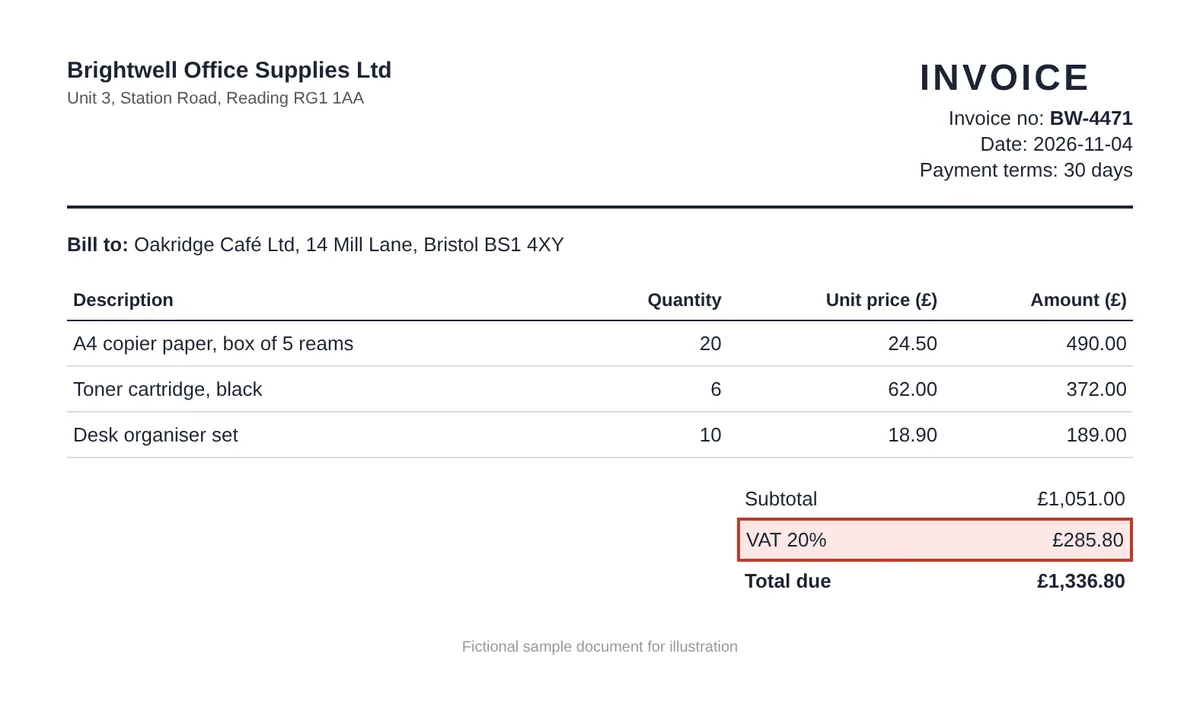
The standard VAT rate in the UK is 20%. On an invoice that is simple maths: the amount before VAT times 0.20. Yet invoices regularly show a VAT figure that does not match, usually because a line was added or removed after the VAT was typed in, or a template still holds an old figure.
In our example the office supplier charged £285.80 of VAT on £1,051.00 of goods. 20% of £1,051.00 is £210.20. That is £75.60 too much, on one invoice.

Wrong VAT is also a problem for your own VAT return, so it is worth fixing even when the difference is small.
2. The same invoice paid twice
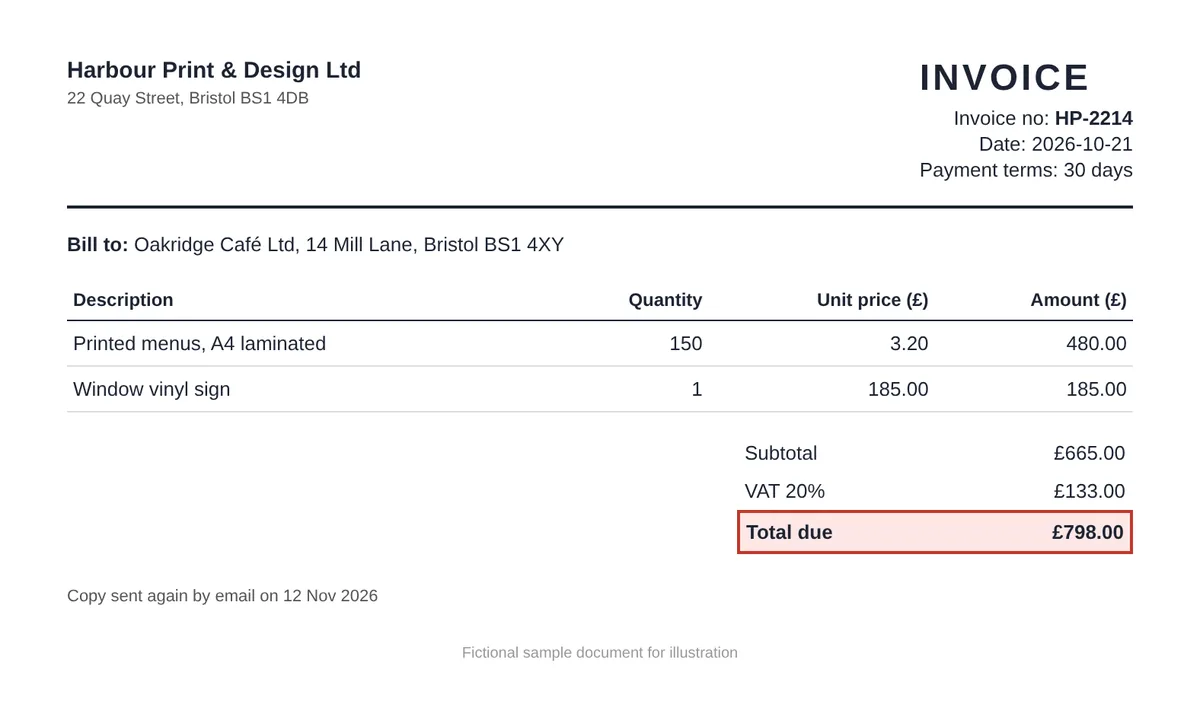
A supplier emails an invoice. Two weeks later they send it again "as a reminder", or someone forwards it to accounts a second time. Nobody remembers it was already paid, so it gets paid again.
Here the print shop's invoice HP-2214 for £798.00 arrived twice. Same number, same lines, same total. If both are paid, that is £798.00 gone until someone asks for it back, and many businesses never do.

Duplicates are the most expensive mistake on this list, because the whole invoice is paid again.
3. The agreed discount is forgotten
You negotiated a loyalty discount. It is in the quote, the email, or the contract. Then the invoices arrive at the normal list price, because the discount was never entered in the supplier's system.
The café agreed to pay £76.50 a case for coffee cups (10% off). The invoice charges £85.00 a case for 12 cases: £102.00 too much on cups, and another £51.60 on lids. Every month, until someone compares the invoice with the quote.
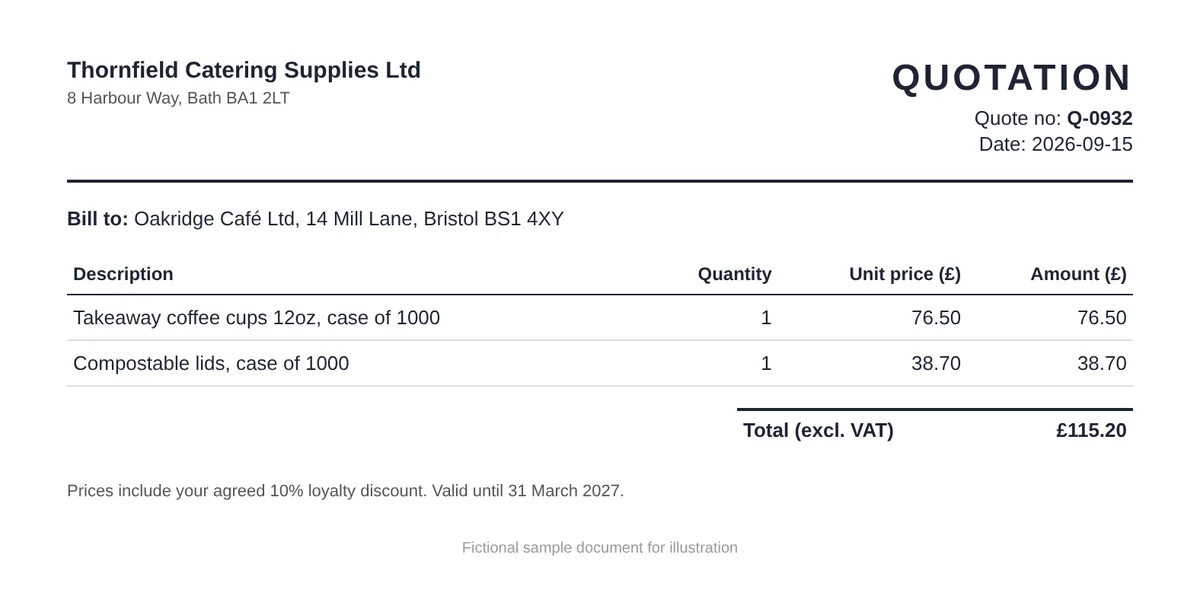
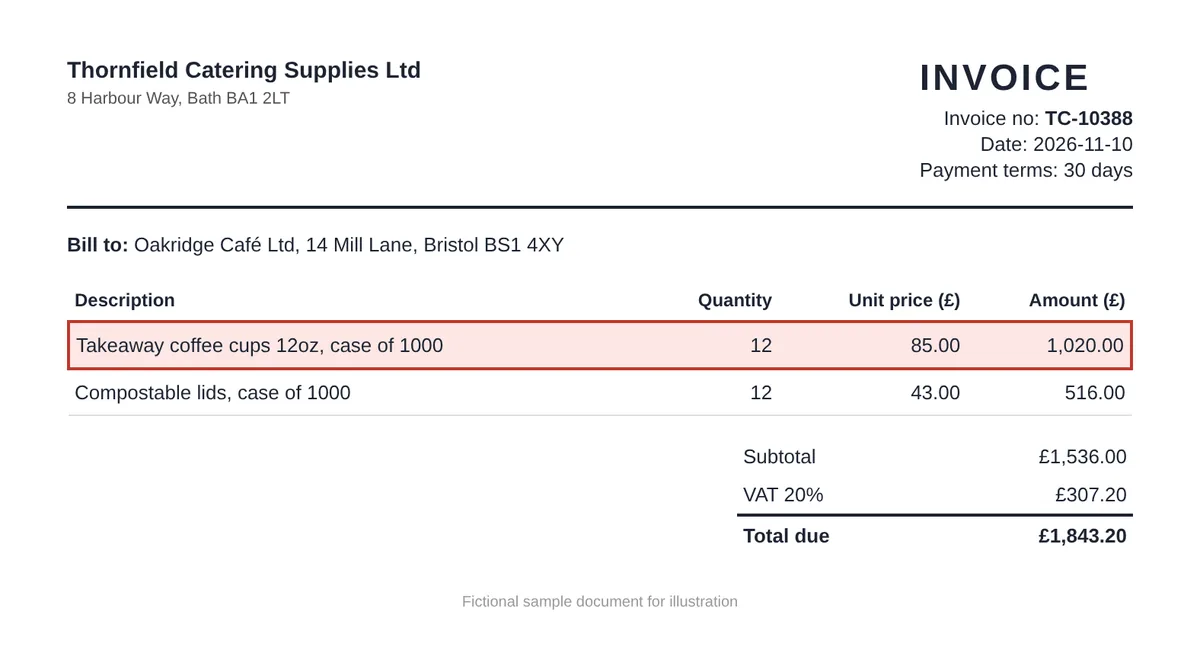

Add your quote, contract or price list once. After that every invoice from that supplier is compared with it.
4. The price goes up quietly
No letter, no email, no new contract. One month the same box simply costs a little more. A few pence per unit does not stand out on a long invoice, but it adds up on every order from then on.
The café's cardboard boxes cost £0.85 in August and £0.98 in November, a rise of 15.3%. On 800 boxes that is £104.00 extra on this invoice alone.
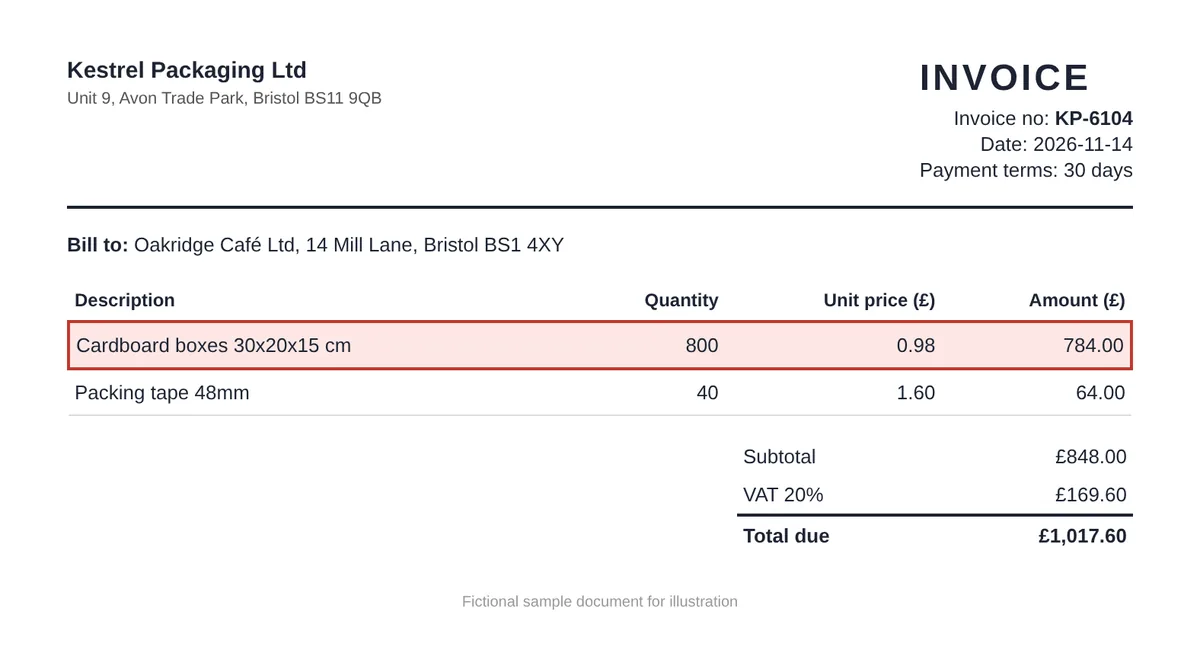

A price rise is not always a mistake. But you should decide to accept it, not discover it a year later.
5. You are billed for more than you ordered
You ordered 24 packs. The invoice says 36. Maybe the warehouse sent more, maybe the number was typed wrong. Either way, unless someone checks the invoice against the order, you pay for all 36.
The purchase order said 24 packs of blue roll. The invoice charges 36 at £11.50 each: £138.00 for goods the café never asked for.
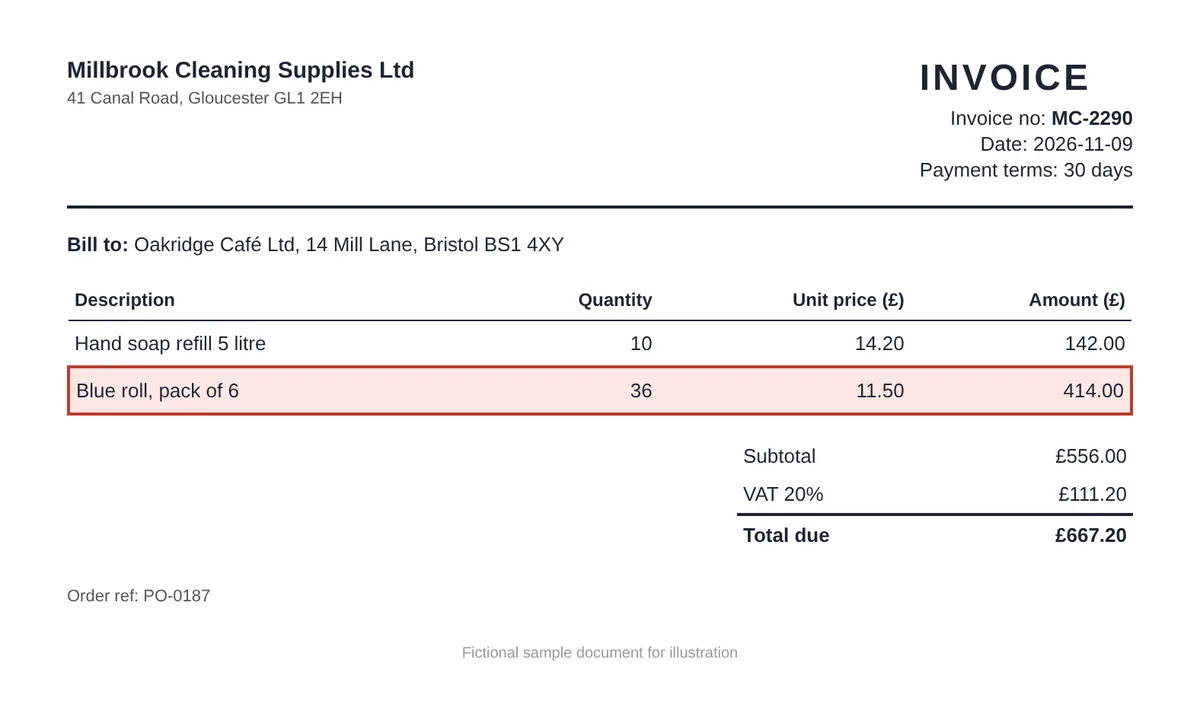

If the extra goods did arrive, you can send them back or ask for a credit note. If they did not, you should not pay for them.
What it adds up to
Nine ordinary documents, five suppliers, one month. Together these mistakes came to £1,269.20: £1,165.20 that may have been paid too much, plus £104.00 of price rises.

How to catch these mistakes
You can check by hand: compare every invoice with the quote and the order, recalculate the VAT, and search your past invoices for the same number. It works, but it takes time, and it is the first job that gets skipped in a busy week.
Or let software do it. QANTYRA reads your invoices, quotes and purchase orders (PDF, Excel, e-invoices or a photo from your phone), checks every line, and shows you in plain words what looks wrong, how much it is, and what to ask the supplier. You decide what to do with it.